Football Coaches Should Learn From North Carolina State’s Pain
Right up front I want to say that this article is meant to help football coaches in the future and not criticize North Carolina State. Their coaching staff will be the first to tell you that the last play of the game vs Vanderbilt falls squarely on them.
I’m writing this article to help you prevent this from ever happening to you or your team.
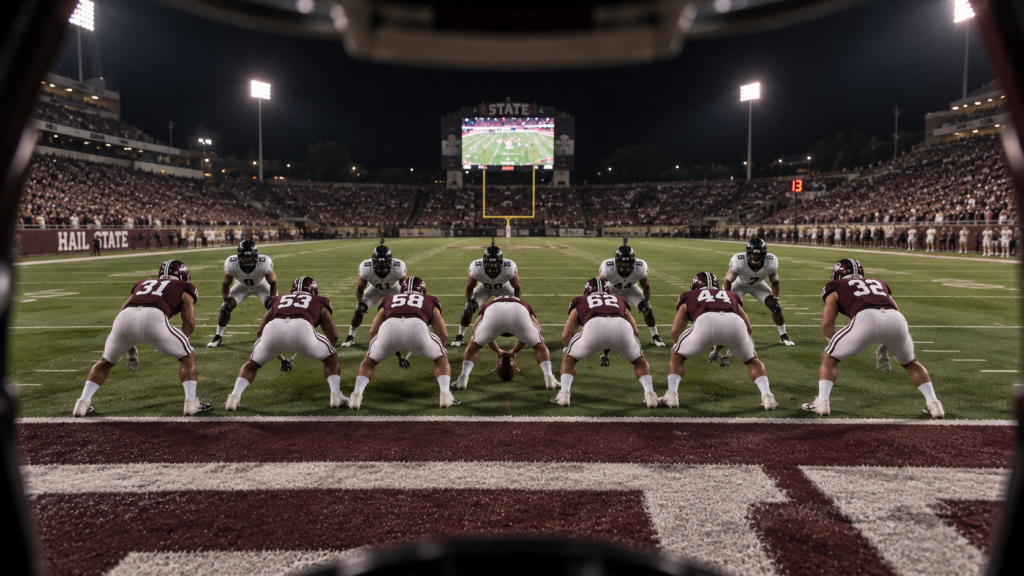
In case you are living under a rock, NC State had possession of the football on their own 4 yard line. There was six seconds remaining in the football game. The Wolfpack had a 3 point lead. The down and distance was 4th and 7.
Before going any further, it’s important to note that I coached special teams in the NFL and college football. As a special teams coach I have coached this very situation in practice with our punt team on a weekly basis.
This situation is slightly different for a special teams coach. We practiced this game situation as we were up by at least 3 points with seconds left on the clock. Very similar to what North Carolina State faced.
This Is A Play That Special Teams Coaches Practice Weekly.
The difference was that if we punted the ball from ten yards deep in our own end zone several bad things could happen. The punt could get blocked and recovered for a touchdown. The punt could get returned or fair caught in field goal range.
Let’s face it, when your team is so focused on punt protection, they are going to be late to cover. That punt that is likely going to be caught around the 35 yard line. College and NFL kickers can make you pay from the 35 yard line.
So what did we coach? Probably something very similar to what the North Carolina State coaches told their players. The one very different thing that was obviously reinforced was there will be no contact on our punter.
The Ball Carrier Only Goes Sideways Or Backwards & Holding Is Required.

The punter in our situation and or quarterback should have taken the snap and retreated with two arms hugging the ball. The last thing that you want to happen is for your player with the ball to get tackled. It just cannot happen.
The player with the ball should retreat to the back of the end zone. Then look for a way to escape the defensive contain rusher. If that is not possible, keep retreating and break the defense’s heart as you step out of the back of the end zone. There will be no time remaining or one second on the clock.
More From FirstDown PlayBook: Are You Cross Training Your Position To Create Depth?
Although I thought Vanderbilt head coach was a little bit cheeky by acting like the game ended the way it should have, I do give his football coaches credit. There is a strategy on that play from the defensive side as well.
The one thing you cannot allow from the defensive side is for the punter or quarterback to break the pocket and burn time off the clock. As you watch the video you see that #9 and #25 from Vanderbilt dod a good job at this.
Vanderbilt penetrated both North Carolina State C gaps, not allowing the quarterback to go anywhere but backwards. Instead, he chose to work up into the contact and paid a heavy price for it.
Coach Long Enough & You Will Be In This Situation
For you who want to say the play should have been coached where the quarterback drops back and throws the ball high in the air and out of bounds, consider this.
Have you seen the accuracy of the clock operators have an affect on the outcome of any games this year. Looking at you Big Ten. If that ball comes down one fraction of a second too soon, NC State has the ball at the four yard line for a field goal attempt.
So obviously, taking the safety was the play that needed to happen. However; there is one more coaching point that you need to think of using if you are in this situation.
If you are punting or using your offense you should predetermine the side your punter to trys to escape contain. Your players to that side should tackle the defenders to that side.
The flags may fly but the defense has a choice. They can either accept the holding penalty or they can decline it. Either way, time has expired.
If you are a football coach long enough, you will find yourself in this situation. Bank on it. Make sure you have practiced it religiously with your punt team or your offense. Most of all, be very specific about what is expected and not expected from your ball carrier.